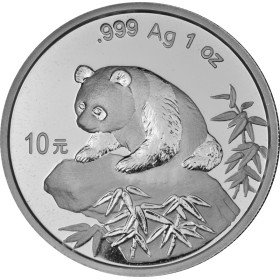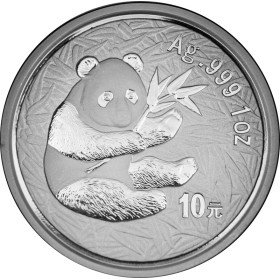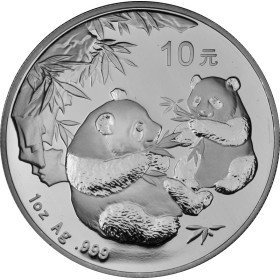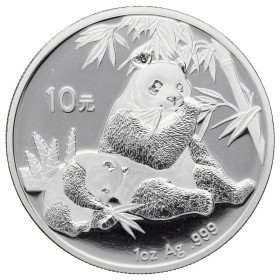



Coins and Bullion from China - Renminb

China

The renminbi (ISO code: CNY; abbreviation: RMB) is the official currency of the People's Republic of China and is issued by the People's Bank of China.

The yuan is the basic unit of the renminbi. One yuan is made up of 10 jiao(jiao is further subdivided into 10 fen).   

The Chinese currency, also known as the renminbi (RMB) or the yuan (CNY), has a long and complex history. The name "renminbi" literally means "people's currency," and the yuan is the basic unit of the renminbi.

The renminbi was first introduced in China in 1948, replacing the Chinese Nationalist government's "gold yuan" and the Communist government's "silver yuan" that were in circulation at the time. However, the renminbi did not become the official currency of China until 1949, when the People's Bank of China was established.

In the early years of the People's Republic of China, the renminbi was pegged to the US dollar at a rate of 1:1. However, this peg was later abandoned in the 1970s as China sought to gain greater control over its own monetary policy. Since then, the value of the renminbi has been allowed to float against other currencies within a narrow band, and the Chinese government has intervened in the currency markets to prevent the renminbi from appreciating or depreciating too quickly.

In recent years, there has been a growing international debate about the value of the renminbi. Some argue that the Chinese government keeps the value of the renminbi artificially low to make Chinese exports more competitive on the global market. Others argue that the renminbi is actually undervalued and that China should allow it to appreciate in order to reflect its true market value.

In 2020, China government launched a new reform policy for foreign exchange management, which includes greater flexibility in the exchange rate. It allows the market forces to play a greater role in setting the value of the RMB, which is expected to make the RMB exchange rate more market-oriented and make the foreign exchange market more open and transparent, and the RMB has been relatively stable compared with other major currencies.

In recent years, China has also been working to internationalize its currency. The Chinese government has signed currency swap agreements with several other countries, allowing them to conduct trade and investment in renminbi rather than in dollars or other foreign currencies. Additionally, Chinese authorities have been encouraging the use of renminbi for international transactions and have established offshore renminbi trading centers in Hong Kong, London, Singapore, Taiwan, and other locations.

Overall, the renminbi has come a long way since its introduction in 1948. While there are still debates about the true value of the currency and the role of the Chinese government in the foreign exchange market, it is clear that the renminbi is becoming increasingly important on the global stage. With China's growing economic influence, it is likely that we will see even more international transactions conducted in renminbi in the years to come.

Banknotes: ¥1 RMB, ¥5 RMB, ¥10 RMB, ¥20 RMB, ¥50 RMB, ¥100 RMB

Coins:  ¥0.1 RMB, ¥0.5 RMB, ¥1 RMB, ¥0.01 RMB, ¥0.02 RMB, ¥0.05 RMB

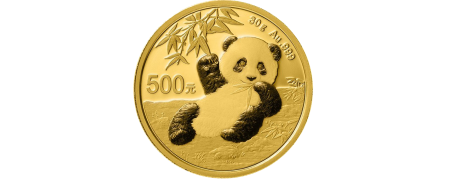
Gold Bullion series:   Lunar Series(released from 1981), Panda(first minted in 1982)

Active filters